
Religious services were initially held at the barracks as the congregation was limited to the Sikh policemen and their families. However, as the community grew, the temple facilities in the police barracks became increasingly inadequate. The civilian section of the community wanted its own gurdwara and a decision was subsequently taken to establish another temple outside the police premises.
In 1912, with the assistance of a Sindhi merchant named Wassiamul, a group of Sikhs bought a bungalow with a large compound at 175 Queen Street and turned it into a gurdwara. The gurdwara became known as Central Sikh Temple (CST). In 1937, the government decided to set up a corporate board of trustees for the temple. In 1940, the Queen Street Gurdwara ordinance was enacted.
In the 1920s and 1930s, an increasing number of Sikhs made their way from Punjab to Singapore. As the Sikh community grew, more gurdwaras were set up to meet the religious and social needs of the community. One of the key social functions of the gurdwaras was the provision of the langar (communal meal) to one and all. In addition to serving as a place of religious worship, the gurdwaras functioned as community centres, where social, educational and other charitable activities were carried out. They were also rendezvous points where Sikhs converged to discuss events in Punjab and the affairs of their community.
Establishment of Istri Sat Sang Singapore
At the turn of the century, the Sikh community in Singapore was predominantly male; its women population was very small and comprised mainly wives of Sikh policemen. The kinds of work available in Singapore, living conditions and the uncertainty of life in an alien environment restricted the migration of females in any significant numbers. Most importantly, however, the early Sikh migrants were of the transitory type who had no intention of settling permanently in Singapore. It was a common practice for
those who came in search of work to leave their wives behind, and for the single ones, once they have earned enough money, to return to India to get married.
Over time, an increasing number of Sikhs made the decision to settle in Singapore. This resulted in the arrival of their spouses in Singapore. Hailing from India, these women found themselves in a foreign country where they could not speak the language and had few or no friends and acquaintances. Their boundary was primarily their homes where they spent time tending to household chores. Many of the male folks took on more than one job, thus being away from home for much of the day and even night. As such,
the women had little or no social interaction with the rest of the community.
After the Second World War, a group of concerned Sikh women came together to form Istri Sat Sang Singapore (ISS). They wanted to create a platform to bring Sikh women together so that they could meet and interact with one another. At the same time, they could participate in religious, social and cultural activities. Oral history reveals that ISS was established at CST on 26 March 1946. It is believed that Mdm Rattan Kaur (mother of Dr Bhagwant Singh, now residing in Adelaide, Australia) was its
first president. ISS was the only known Sikh-women platform at that time. It naturally became an important channel for Sikh women to meet, interact and participate in religious and social activities. Like Sikh men using the gurdwaras as meeting points to discuss Punjab affairs, among others, Sikh women also saw ISS as an important platform to meet other Sikh women and to exchange news and developments in their homeland.
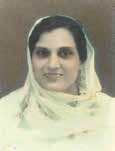 Mdm Rattan Kaur
Formalisation and Inauguration
Since its establishment, ISS functioned as an informal organisation. On 17 July 1963, its members held a meeting and decided to elect an Executive Council. Eleven Executive Council members were elected. This marked the formalisation o ISS, some 17 years after its establishment. The members then drew up the constitution and ISS was formally registered as a society on 2 March 1964.
The key appointment holders were:
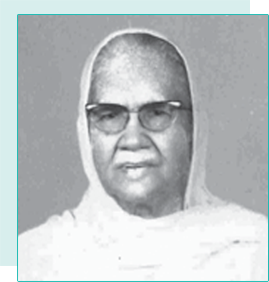
Mdm Dyal KaurPresident
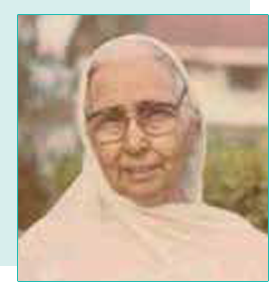
Mdm Gurcharan KaurVice President
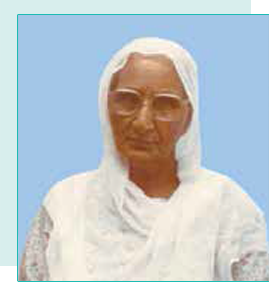
Mdm Kartar KaurSecretary
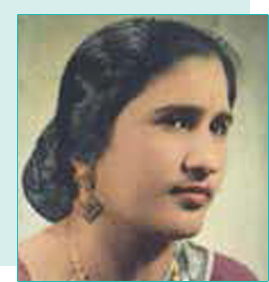
Mdm Surjit KaurTreasurer
Its key objectives were:
- To provide religious and educational advancement.
- To provide social and religious activities.
- To hold prayer meetings and organise religious programmes, for example, Sukhmani Sahib (Treasure of Peace).
- To participate and selflessly contribute to gurpurabs (celebration of an anniversary related to the Sikh Gurus’ lives) at CST.
- To contribute to fundraising efforts in supporting building renovation initiatives not only at CST and Sikh institutions in Singapore but also at other gurdwaras across the Causeway.
Following its formalisation, ISS became more organised, with regular meetings and election of Executive Council members, as well as the organisation of a regular slate of programmes and activities.
Mission, Vision and Activities
In an effort to provide meaning and direction, ISS developed the vision of propagating Sikhism and being an active player in providing support to initiatives at CST and the Central Sikh Coordinating Council.